Canceling Your Crunch Membership? How to Switch to an Affordable, Community-Focused Gym
- homefrontfitness
- Feb 11
- 10 min read
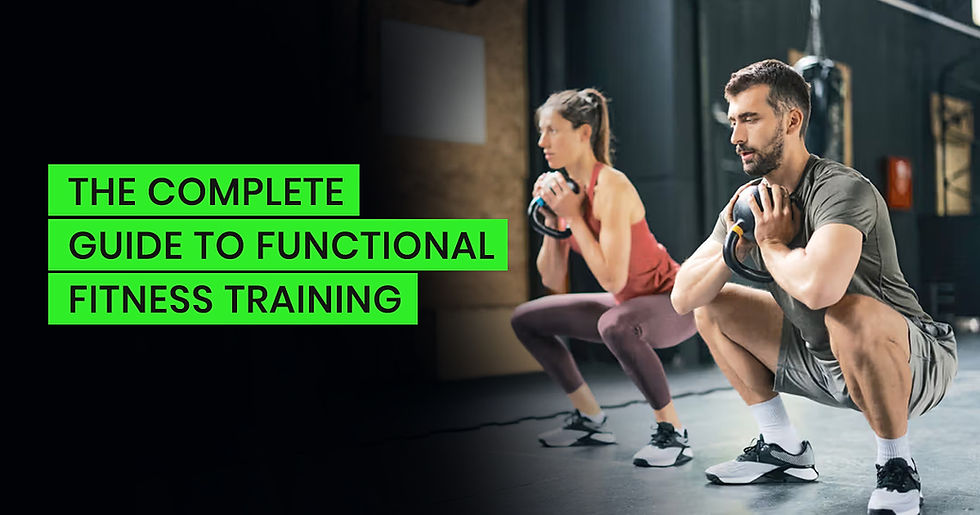
The Complete Guide to Functional Fitness Training: Why It's the Most Effective Workout Method for Real-Life Strength
Have you ever wondered why some people seem to move through life with ease and confidence, lifting groceries without strain, playing with their kids without getting winded, or simply feeling strong and capable in their everyday activities? The answer often lies in something called functional fitness training. Unlike traditional gym workouts that isolate individual muscle groups, functional fitness focuses on building strength that translates directly to real-world movements and activities. If you're looking to transform not just how you look, but how you feel and perform in daily life, understanding functional fitness could be the game-changer you've been searching for.
In this comprehensive guide, we'll explore what functional fitness training really is, why it's becoming the preferred method for people of all ages and fitness levels, and most importantly, how you can start incorporating it into your routine today. Whether you're a busy professional in Washington, Missouri looking to maximize your workout time, or someone recovering from an injury seeking a safer way to build strength, this guide will give you everything you need to know.
What Exactly is Functional Fitness Training and Why Should You Care?
Functional fitness training is a training philosophy that emphasizes exercises and movements that help your muscles work together and prepare them for daily tasks. Rather than focusing on isolated movements like bicep curls or leg extensions, functional fitness training incorporates compound movements that engage multiple muscle groups simultaneously, mimicking the way your body naturally moves.
The core principle behind functional fitness is simple: your body doesn't work in isolation. When you pick up a heavy box, you're not just using your arms. You're engaging your core, your legs, your back, and your stabilizer muscles all at once. Traditional gym equipment often trains muscles in isolation, which can create imbalances and doesn't prepare your body for real-world demands. Functional fitness training, on the other hand, trains your body as an integrated system.
How Does Functional Fitness Training Differ from Traditional Strength Training?
This is an important distinction that many people don't fully understand. Traditional strength training typically involves exercises performed on machines or with free weights in a controlled, isolated manner. You might spend 20 minutes on a leg press machine, then move to a hamstring curl machine, then a calf raise machine. Each exercise targets a specific muscle group in a specific plane of motion.
Functional fitness training, by contrast, uses exercises that involve multiple joints and muscle groups working together. Instead of a leg press machine, you might do a barbell squat, which requires your quads, hamstrings, glutes, core, and back all to work in coordination. Instead of a hamstring curl machine, you might do a deadlift variation that engages your entire posterior chain.
Key Insight: Functional fitness training builds strength that matters in real life. A person with strong functional fitness can easily carry groceries up stairs, lift a child, or move furniture without injury. Traditional isolation training might make you look strong, but functional fitness makes you actually strong.
The difference becomes even more apparent when you consider stability and balance. Functional fitness training often involves unstable surfaces or requires you to balance while performing movements. This trains your stabilizer muscles and improves your proprioception—your body's awareness of its position in space. These are critical for injury prevention and real-world performance.
What Are the Major Benefits of Functional Fitness Training?
Understanding the benefits of functional fitness training can help you see why this approach has become so popular among fitness professionals and people serious about long-term health. Let's break down the major advantages:
1. Improved Real-World Strength and Performance
The most obvious benefit of functional fitness training is that it makes you stronger in ways that matter. If your goal is to be able to play with your grandchildren without getting tired, carry your own groceries, or simply feel capable and strong in your daily life, functional fitness delivers results. The movements you train directly translate to the movements you perform every day.
Research in exercise physiology has consistently shown that functional fitness training produces superior real-world performance improvements compared to traditional isolation training. A study published in the Journal of Strength and Conditioning Research found that functional training resulted in greater improvements in balance, coordination, and functional movement patterns than traditional strength training alone.
2. Enhanced Core Strength and Stability
One of the most significant benefits of functional fitness training is the dramatic improvement in core strength. Your core isn't just your abs—it's your entire trunk, including your deep stabilizer muscles. When you perform functional exercises like squats, deadlifts, and overhead presses, your core is constantly engaged to stabilize your spine and transfer force between your upper and lower body.
This enhanced core strength has cascading benefits. A stronger core improves your posture, reduces back pain, enhances athletic performance, and makes everyday activities easier. Many people spend years doing crunches and sit-ups trying to strengthen their core, only to find that functional fitness training delivers far superior results in a fraction of the time.
3. Injury Prevention and Rehabilitation
Because functional fitness training emphasizes proper movement patterns and balanced muscle development, it's excellent for injury prevention. By training your body to move correctly and building balanced strength throughout your entire kinetic chain, you reduce your risk of common injuries like lower back pain, shoulder impingement, and knee problems.
Additionally, functional fitness training is often recommended by physical therapists and rehabilitation specialists for injury recovery. The emphasis on controlled, multi-planar movements helps restore proper movement patterns and functional capacity after an injury.
4. Time Efficiency
If you're a busy professional in Washington, Missouri or anywhere else, you know that time is precious. One of the best benefits of functional fitness training is that it's incredibly time-efficient. Because you're engaging multiple muscle groups simultaneously, you can achieve a complete, full-body workout in 30-45 minutes. Compare this to traditional split routines that might require 60-90 minutes to hit all muscle groups.
This efficiency means you can maintain consistent training even with a hectic schedule, which is crucial for long-term success.
5. Improved Balance and Coordination
As we age, balance and coordination become increasingly important for maintaining independence and preventing falls. Functional fitness training specifically targets these qualities through exercises that challenge your stability and proprioception. This is particularly valuable for older adults, but it benefits people of all ages.
Essential Functional Fitness Training Exercises You Should Know
Now that you understand what functional fitness training is and why it's beneficial, let's explore some of the most effective exercises. These movements form the foundation of any solid functional fitness program:
The Squat: The King of Functional Movements
The squat is arguably the most fundamental functional fitness training exercise. It mimics the movement of sitting down and standing up, something you do dozens of times every day. A proper squat engages your quads, hamstrings, glutes, core, and even your upper back.
To perform a basic bodyweight squat: Stand with your feet shoulder-width apart, lower your hips back and down as if sitting in a chair, keeping your chest up and your weight in your heels, then drive through your heels to stand back up. As you progress, you can add weight with dumbbells, kettlebells, or a barbell.
The beauty of the squat is its scalability. Beginners can start with bodyweight squats or assisted squats using a TRX strap or suspension trainer. Advanced athletes can perform pistol squats (single-leg squats) or loaded barbell squats with significant weight.
The Deadlift: Building Posterior Chain Strength
The deadlift is a compound movement that engages your entire posterior chain—your glutes, hamstrings, back, and core. It's one of the most functional movements because it mimics picking something up off the ground, something you do regularly in daily life.
A proper deadlift starts with the bar on the ground, your feet hip-width apart, and your hands just outside your legs. You hinge at the hips and knees, keeping the bar close to your body, and drive through your heels to stand up. The key is maintaining a neutral spine throughout the movement.
The deadlift is incredibly versatile. You can perform it with a barbell, dumbbells, kettlebells, or even a trap bar. Variations like the Romanian deadlift and single-leg deadlift provide additional challenges and benefits.
Push-Ups and Overhead Pressing: Upper Body Functional Strength
Push-ups are a classic functional fitness training exercise that engages your chest, shoulders, triceps, and core. They're also incredibly scalable—you can perform them on your knees, against a wall, or with your feet elevated for increased difficulty.
Overhead pressing movements, whether with dumbbells, kettlebells, or a barbell, build shoulder stability and strength. These movements are functional because they prepare your body for lifting objects overhead, something that comes up in real life more often than many people realize.
Lunges and Step-Ups: Single-Leg Functional Strength
Lunges and step-ups are excellent functional fitness training exercises because they train each leg independently, helping to identify and correct imbalances. They also train your balance and stability, which are critical for injury prevention.
A proper lunge involves stepping forward with one leg, lowering your hips until both knees are bent at approximately 90 degrees, then driving back to the starting position. You can perform lunges with bodyweight, holding dumbbells, or with a barbell across your shoulders.
Rows and Pulling Movements: Balanced Upper Body Development
While pushing movements are important, pulling movements are equally critical for balanced strength and injury prevention. Rows, whether performed with dumbbells, barbells, or cable machines, engage your back, shoulders, and biceps.
Pulling movements like pull-ups, chin-ups, and lat pulldowns are essential components of functional fitness training. These movements build the back strength necessary for good posture and help prevent shoulder injuries.
How to Design Your Own Functional Fitness Training Program
Now that you understand the principles and key exercises of functional fitness training, how do you put it all together into an effective program? Here are the key principles:
Start with Movement Quality Over Weight
When beginning your functional fitness training journey, prioritize perfect form over heavy weight. It's far better to perform a squat with perfect form using your bodyweight than to perform a heavy squat with poor form. Poor form not only reduces the effectiveness of the exercise but also increases your injury risk.
Spend your first few weeks or months focusing on learning proper movement patterns. This investment in technique will pay dividends for years to come.
Include Compound Movements in Every Workout
Your functional fitness training program should be built around compound movements that engage multiple muscle groups. Every workout should include a lower body movement (squat or deadlift variation), an upper body pushing movement (push-up or overhead press), and an upper body pulling movement (row or pull-up).
These three categories of movements form the foundation of any effective functional fitness training program.
Train 3-4 Days Per Week
Most people see excellent results with functional fitness training performed 3-4 days per week. This frequency allows you to hit all major movement patterns while providing adequate recovery time. Recovery is when your body actually gets stronger, so don't underestimate its importance.
Progress Gradually
Functional fitness training is a long-term commitment. Rather than trying to make dramatic changes overnight, focus on gradual progression. This might mean adding a few more repetitions each week, increasing the weight slightly, or progressing to a more difficult variation of an exercise.
This gradual approach not only reduces injury risk but also provides consistent motivation as you see steady improvements.
Common Mistakes People Make with Functional Fitness Training
Understanding common pitfalls can help you avoid them and accelerate your progress. Here are the most frequent mistakes:
Mistake 1: Neglecting Warm-Up and Mobility Work - Many people jump straight into their main workout without proper preparation. Functional fitness training demands mobility and stability, so spending 5-10 minutes on warm-up and mobility work is essential.
Mistake 2: Progressing Too Quickly - It's tempting to add weight or increase difficulty too rapidly, but this is a recipe for injury. Progress gradually and focus on quality movement.
Mistake 3: Ignoring Nutrition and Recovery - Functional fitness training is demanding, and your body needs proper fuel and recovery to adapt and grow stronger. Don't sabotage your training with poor nutrition or inadequate sleep.
Mistake 4: Training Alone Without Guidance - While functional fitness training can be self-taught, having expert guidance from a qualified trainer can accelerate your progress and help you avoid injuries. A personal trainer can assess your movement patterns, identify imbalances, and design a program specifically for your needs.
Getting Started with Functional Fitness Training at Homefront Fitness
If you're in Washington, Missouri or any of our surrounding communities, Homefront Fitness is the perfect place to begin your functional fitness training journey. Our facility is equipped with everything you need—free weights, kettlebells, suspension trainers, and functional training rigs. More importantly, our certified coaches are experts in functional fitness training and can guide you through proper movement patterns and program design.
Whether you're just starting your fitness journey or you're an experienced athlete looking to improve your functional strength, we have the expertise and community to support you. Our 24/7 gym access means you can train whenever it fits your schedule, and our supportive community ensures you'll stay motivated.
Ready to Transform Your Strength? Functional fitness training has the power to change not just how you look, but how you feel and perform in every aspect of your life. The question isn't whether you can benefit from functional fitness training—it's whether you're ready to commit to it.
Frequently Asked Questions About Functional Fitness Training
Q: Is functional fitness training suitable for beginners?
A: Absolutely. Functional fitness training is highly scalable and can be adapted for any fitness level. Beginners should start with bodyweight movements and focus on perfect form before adding weight. A qualified trainer can help you progress safely.
Q: How long does it take to see results from functional fitness training?
A: Most people notice improvements in strength, energy, and how they feel within 2-3 weeks of consistent functional fitness training. More visible physical changes typically appear within 4-8 weeks, though this varies based on your starting point and consistency.
Q: Can functional fitness training help with weight loss?
A: Yes. Functional fitness training builds muscle, which increases your metabolic rate. Combined with proper nutrition, functional fitness training is an effective approach to weight loss and body composition improvement.
Q: Do I need special equipment for functional fitness training?
A: No. Many functional fitness training exercises can be performed with just your bodyweight. However, equipment like dumbbells, kettlebells, and barbells provides additional options and progression opportunities.
Q: How is functional fitness training different from CrossFit?
A: While CrossFit incorporates many functional fitness training principles, they're not identical. CrossFit emphasizes varied, high-intensity workouts with a competitive element. Functional fitness training is a broader philosophy that can be applied to various training styles and intensities.
Q: Can older adults benefit from functional fitness training?
A: Functional fitness training is particularly beneficial for older adults because it improves balance, coordination, and real-world strength—all critical for maintaining independence and preventing falls. Always consult with a healthcare provider before starting any new exercise program.
Ready to start your functional fitness training journey? Visit Homefront Fitness today and experience the difference that expert coaching and a supportive community can make. Start your fitness journey and discover why functional fitness training is transforming lives across Washington, Missouri and our surrounding communities.

Comments